WHAT’S GROWING ON?
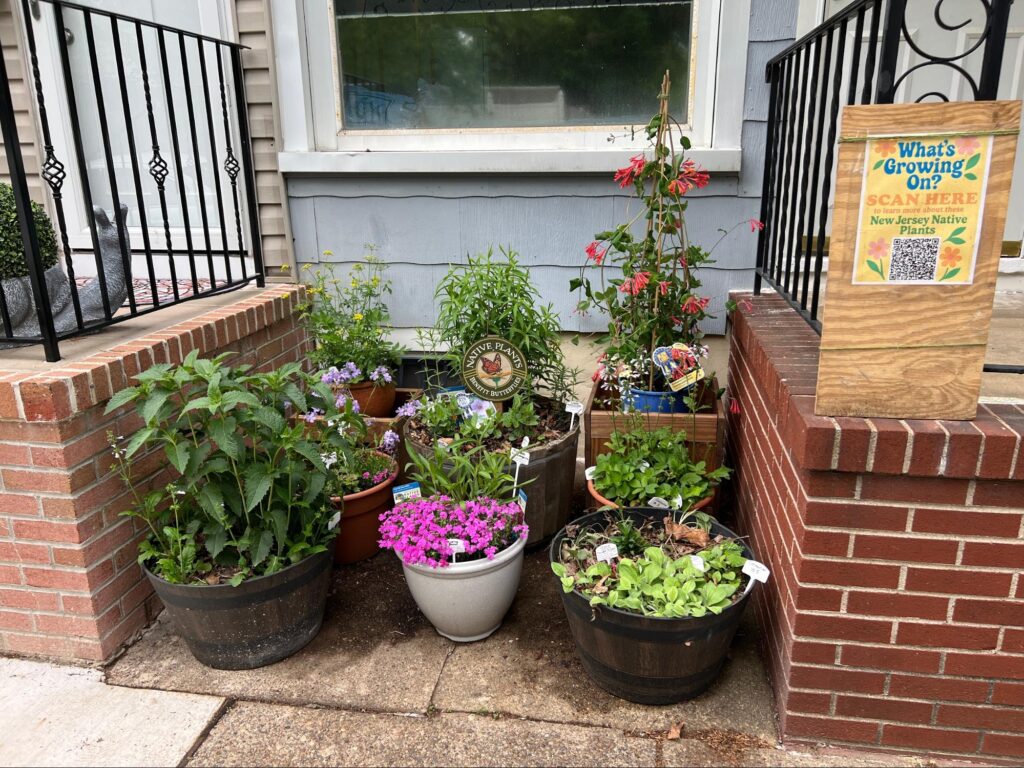
The goal of Nikki’s Native Plant Nook is to emphasize the beauty and benefits of adding New Jersey native plants to your gardens. Native plants require less water, no harsh chemicals, and they provide a food source for essential native pollinators. With a little research (right plant, right place) and minimal effort you can help nature thrive right in your own backyard, patio, or even on your sidewalk! Click on each plant name for a full plant profile on WHAT’S GROWING ON in The Nook.
Container 1
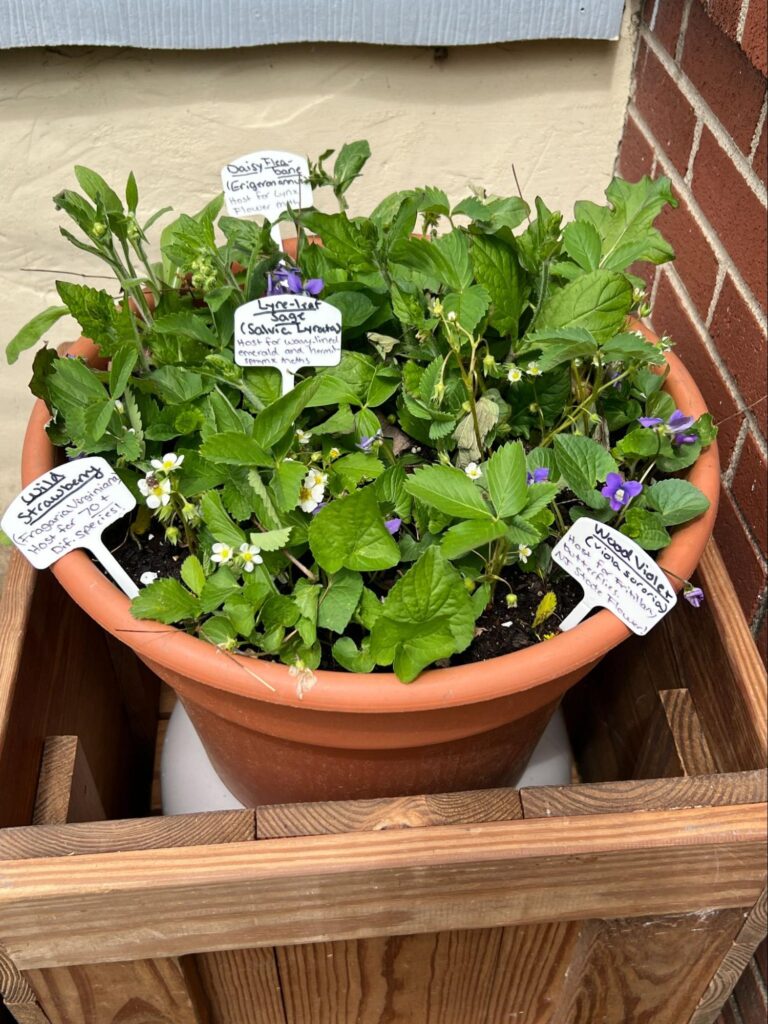
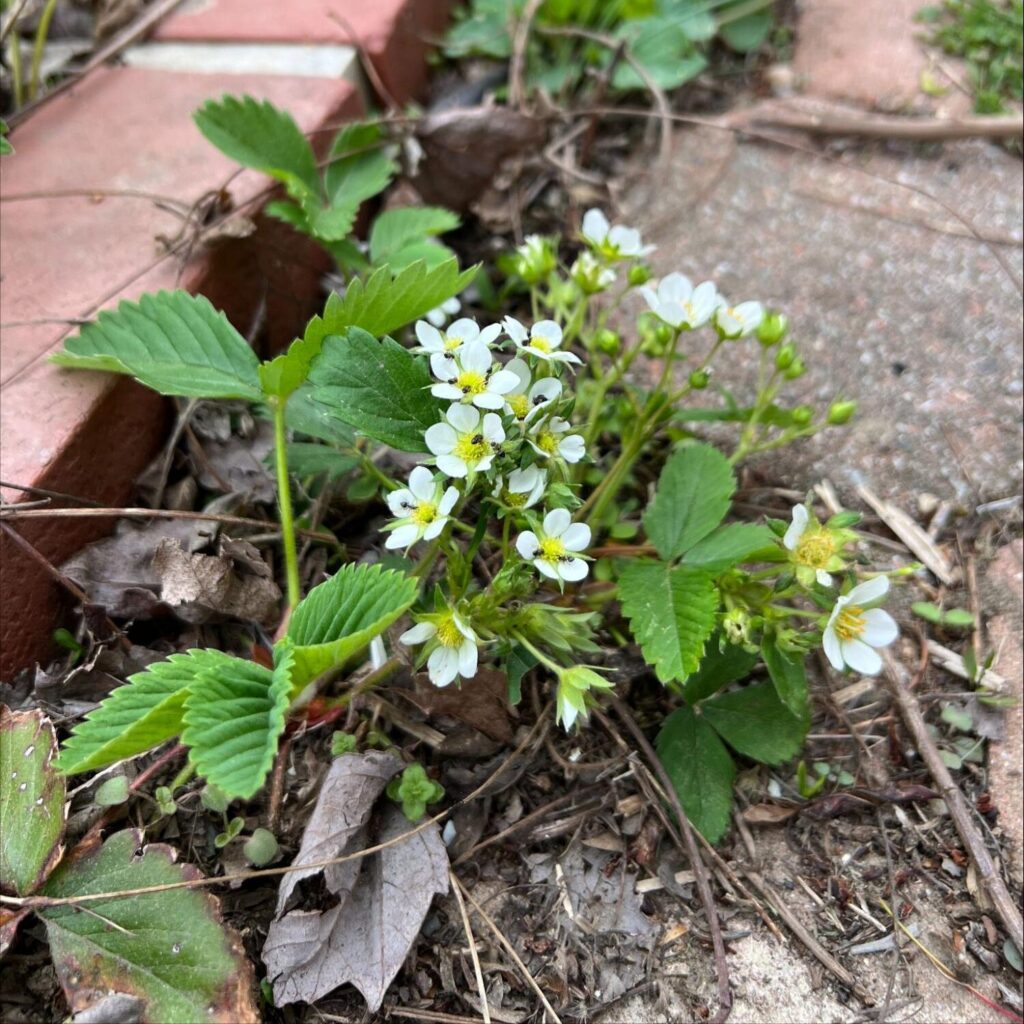
Wild Strawberry (fragaria virginiana)
Clusters of small white flowers in the spring yield edible berries that are small but flavorful. Fragaria virginiana hosts over 70 different lepidoptera (caterpillar/moth) species! Makes an excellent living mulch and ground cover. Easy to control. Plays nicely with other established native perennials. Walkable and mowable.

Lyreleaf Sage (Salvia Lyrata)Slender pale-purple tubular flowers emerge late spring and are attractive to native bees and hummingbirds. Host plant to wavy-lined emerald and hermit sphinx moths. Makes an excellent evergreen groundcover as it is mowable and walkable. Extremely adaptable to different light and soil conditions.
Daisy Fleabane (erigeron annuus)
Cheery annual that blooms from spring to fall with small daisy-like flowers that are highly attractive to small pollinating insects. It can handle being mowed and light foot traffic. This plant is adaptable and fuss free and spreads readily by seed.
Wood Violet (viola sororia)Viola species are host to fritillary butterflies! Leaves and flowers are edible.. Makes an excellent ground cover as it is mowable and tolerates light foot traffic. Violets have a special relationship with one of our tiniest but most powerful pollinators; ants! Their seeds are covered in a special fatty layer that is attractive to and is digested by ants, who then disperse the seeds. Violets also produce underground blooms that allow them to self-fertilize. Viola Sororia is the official State Flower of New Jersey!
Container 2

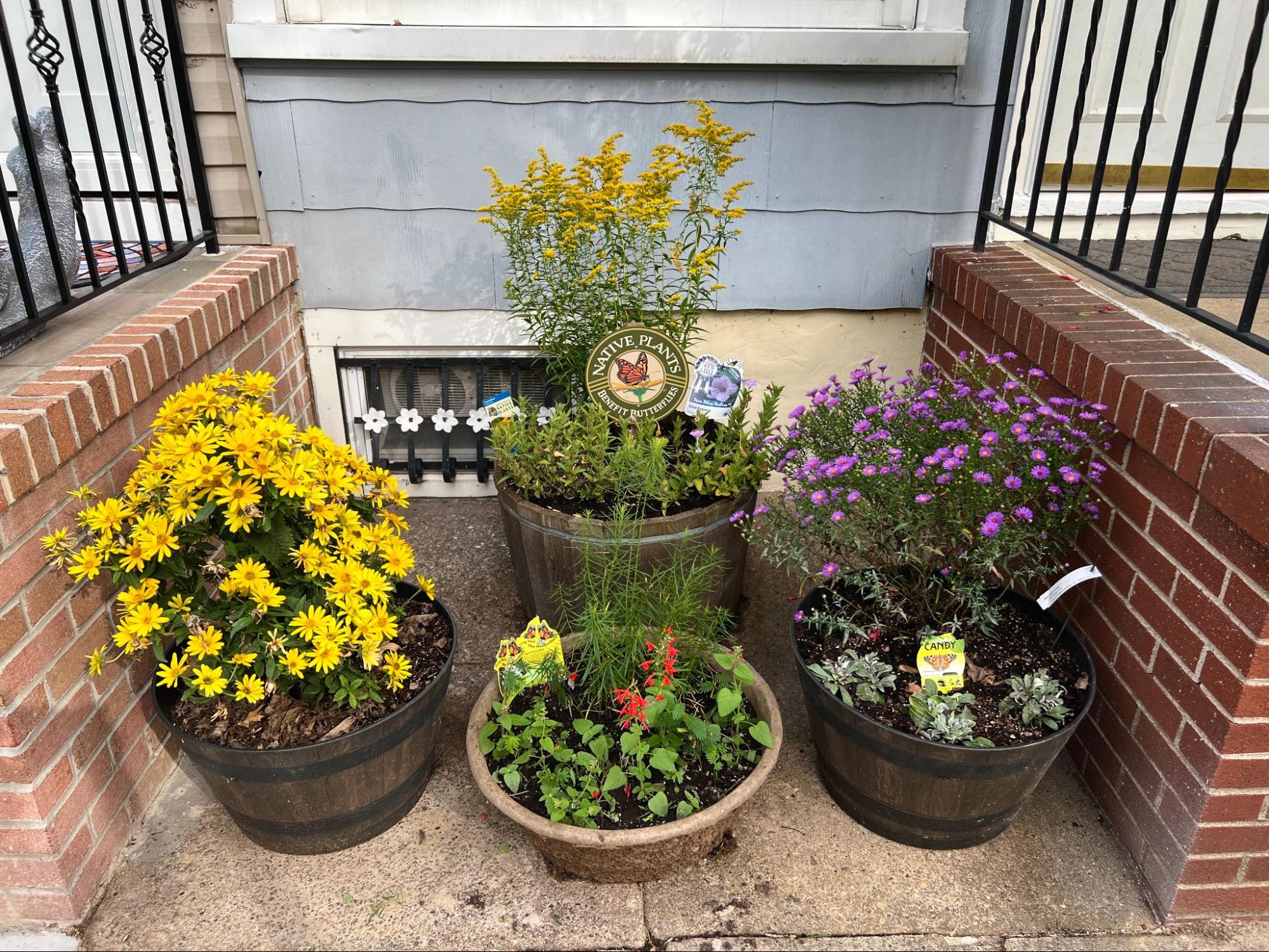
Anise-Scented Goldenrod (solidago odora)
Solidago species are host to over 100 lepidoptera (butterfly/moth) species. Solidago odora has leaves that smell of anise when crushed. Leaves and flowers can be used for a delicious and medicinal tea. Yellow tufts of flowers that are nectar and pollen rich bloom late into the fall season, a crucial time for pollinators. This species of goldenrod is well behaved and an excellent addition to the home garden.
Wild Petunia (ruellia humilis)
Technically native adjacent (native to all states surrounding NJ), wild petunia is a long blooming, low-growing perennial with purple flowers that are attractive to butterflies, bees and hummingbirds. Larval food plant for the Buckeye and several other butterfly species.

Virginia Mountain Mint (pycnanthemum virginianum)
Small clusters of white flowers adorn stalks with slender leaves. One of the most dainty (and well-behaved) varieties of the mountain mints. Entire plant is edible. This plant is a pollinator powerhouse with its nectar rich long-blooming flowers.
CONTAINER 3

Golden Alexander (zizia aurea)
Being a member of the carrot family, golden alexander is host plant for black swallowtail butterflies! Extremely adaptable to a wide range of sun, soil and water conditions. Cherry yellow flowers emerge early and bloom throughout spring. They are a short-lived perennial that reseed readily and make for an excellent living mulch within the garden bed.
Wild Strawberry (fragaria virginiana)
Fragaria virginiana hosts over 70 different lepidoptera (caterpillar/moth) species! Makes an excellent living mulch and ground cover. Tolerates light foot traffic and is mowable and edible.
CONTAINER 4

Aster ‘Woods Purple” Symphyotrichum dumosum
This is a cultivated variety of the native bushy aster. It provides a more compact stature and tidy appearance without compromising on wildlife value. It is drought resistant and easy to maintain. Rich in nectar and pollen late in the season. Seeds are of special value to songbirds. Handles full sun to part shade and is as adaptable as it is beautiful.
Plantain-leaved Pussytoes (antennaria plantaginifolia)
Low growing fuzzy leaves are adorned by short, fluffy-white flowers in early spring that are said to resemble cats’ paws, thus lending their name. They can provide an excellent ground cover and living mulch if encouraged to spread. Very easy to control and well-behaved. They can handle full sun with very little water, but need soil with good drainage. Host plant for painted lady butterflies.
CONTAINER 5


False Sunflower (heliopsis helianthoides)
Extremely drought resistant and attractive garden specimen with an extended bloom time. Its open, sunflower-like structure makes nectar and pollen accessible to both short and long-tongued bees and is a favorite of one of New Jersey’s most visually striking native bees, the bi-colored striped sweat bee (agapostemon virescens).
Lyreleaf Sage (Salvia Lyrata)
Attractive to hummingbirds. Host plant to wavy-lined emerald and hermit sphinx moths. Adaptable. Makes an excellent groundcover and living mulch.

CONTAINER 6
Coral Honeysuckle (lonicera sempervirens)
Host to clearwing sphinx moth. Well-behaved and long-blooming native vine that is beloved by hummingbirds. Best in full sun but will tolerate part shade. This plant blooms and yields berries simultaneously!

CONTAINER 7
Fire-Pink (Silene Virginica)
Attracts Hummingbirds. Blooms start mid spring and may continue through mid-summer. Prefers part shade.
Creeping Phlox (phlox subulata)
Attractive to butterflies and moths. Full sun to part shade. Drought tolerant. Excellent choice for ground cover and erosion control.
CONTAINER 8

Woodland Phlox (phlox divaricata)
Flowers attract butterflies and moths. Shade tolerant blooms that permeate the spring air with their sweet scent. Also known as wild sweet william.
Foamflower (tiarella cordifolia)
Spikes of white flowers emerge in spring and are attractive to early emerging pollinators. Will form a colony through runners making this an excellent ground-cover for shady sites.
Creeping Phlox (phlox subulata)
Attractive to butterflies and moths. Full sun to part shade. Drought tolerant. Excellent choice for ground cover and erosion control.

WHERE CAN I FIND NATIVE PLANTS?
While many native plants can be grown from seed, it can require certain conditions (such as cold-stratification) for seeds to germinate and years for them to bloom and flourish. Fortunately, there is a long list of nurseries in our area that offer native and pollinator-friendly plants that have taken that work and time out of the equation. Many of the plants that you’ll see within The Nook are from MY BACKYARD AT NECTARS in nearby Titusville! They are a small nursery making massive strides within the native plant community; offering both a wide-array of locally-grown plants and an abundance of knowledge. For a full list of nurseries offering native plants in our area CLICK HERE!
WHY PLANT NATIVE?
Planting native plants is one of the best ways to support local ecosystems. Native species are perfectly adapted to the climate, soil, and wildlife of their region, making them easier to maintain and naturally resilient. They provide essential food and habitat for birds, bees, butterflies, and other pollinators. Their long roots can help with soil erosion and provide a filtration system for water run-off, keeping our waterways clean and protected. Native plants are not only beautiful in your garden but can be functional as well. Do you have an area of your yard that holds standing water? Native plants have got you covered! Adding a rain garden can alleviate those problems. To get started take a look at THE RAIN GARDEN MANUAL OF NEW JERSEY as presented by the NATIVE PLANT SOCIETY OF NEW JERSEY.
TIPS ON CONTAINER GARDENING
Plants that are shallow rooted and prefer dry to average soil conditions tend to have the most success being kept in containers long-term. Specimens must be winter hardy to two zones lower than your region. A light layer of leaf mulch at the end of fall can help insulate plants over the winter and will provide water retention and nutrients during the growing season. Be sure to give supplemental water during extended periods of drought. Some plants will benefit from dead-heading of spent flowers to prolong bloom-time. If they are annuals allow them to go to seed for blooms the subsequent year. Also, be sure to leave some seedheads for the birds!

MORE NATIVE PLANT RESOURCES
